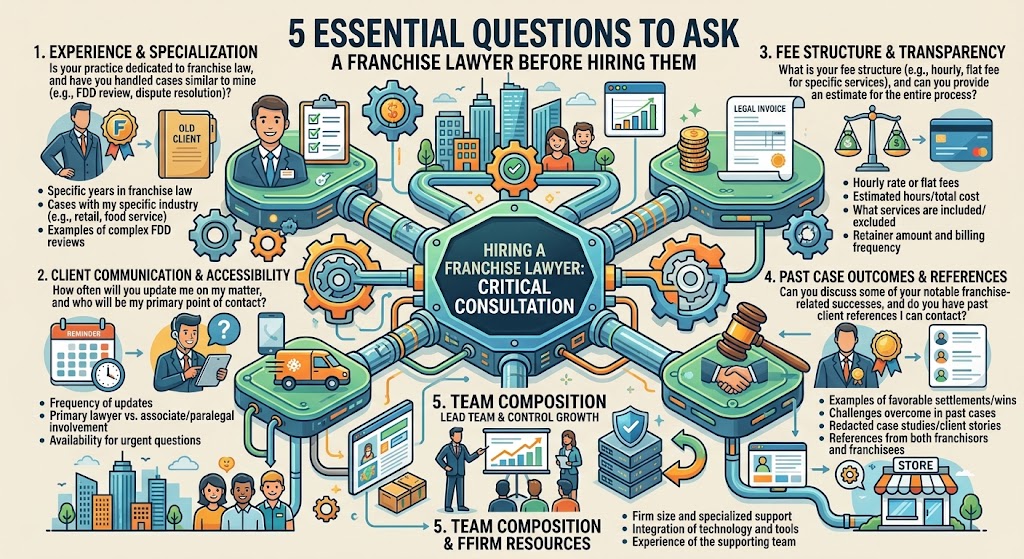
Buying a franchise is an important business decision that involves financial commitments, legal agreements, and long-term responsibilities. Before signing a franchise agreement, it is essential to understand your rights and obligations as a franchisee. A franchise lawyer can help you review legal documents, identify potential risks, and make informed decisions throughout the process. However, choosing the right lawyer requires careful consideration. Asking the right questions before hiring them can help you assess their experience, understand their services, and determine whether they are suitable for your business needs.
1. What Experience Do You Have in Franchise Law?
One of the first questions to ask a franchise lawyer is about their experience in franchise law. Franchising involves specific legal requirements, agreements, and relationships between franchisors and franchisees. A lawyer with relevant experience is more likely to understand the common challenges involved in franchise ownership. Ask whether they have worked with businesses similar to yours and whether they have experience reviewing franchise agreements. Their answers can help you understand their knowledge of the industry and their ability to provide advice that suits your situation.
2. Can You Explain the Franchise Agreement to Me?
A franchise agreement outlines the terms and conditions of your relationship with the franchisor. It may cover franchise fees, royalties, operating requirements, territory rights, renewal conditions, and circumstances under which the agreement can be terminated. Before hiring a lawyer, ask how they will review and explain these terms. A good franchise lawyer should be able to identify clauses that could create risks or limit your business flexibility. They should also explain your responsibilities in clear language so that you understand what you are agreeing to before signing any documents.
3. What Are Your Fees and Payment Terms?
Understanding legal costs is important when planning your franchise investment. Ask the lawyer how they charge for their services and whether they offer fixed fees, hourly rates, or another payment arrangement. You should also find out what is included in the quoted price and whether additional charges may apply if the work becomes more complex. For example, reviewing an agreement may involve different costs from negotiating changes or advising on a dispute. Having a clear understanding of fees from the beginning can help you manage your budget and avoid unexpected expenses during the franchise process.
4. What Potential Risks Should I Be Aware Of?
Before investing in a franchise, you need to understand the legal and commercial risks involved. Ask the lawyer to explain any concerns they identify in the franchise agreement and related documents. These could include restrictive operating conditions, unexpected financial obligations, limitations on selling the business, or strict termination clauses. You can also ask how the agreement addresses disputes between the franchisee and franchisor. Although a lawyer cannot eliminate every business risk, they can help you recognise potential problems and understand the options available to you before making a commitment.
5. How Will You Communicate With Me Throughout the Process?
Clear communication is essential when working with a franchise lawyer. Ask how you will contact them, how quickly they typically respond, and who will handle your case. You should also understand how they will keep you updated on important developments and explain any legal issues that arise. Franchise agreements can contain complicated terms, so it is important to work with someone who is willing to answer your questions and explain your options. A lawyer who communicates clearly can make the process less stressful and help you feel more confident about your decisions.
To Summarise
Choosing the right franchise lawyer can help you understand the legal requirements of franchise ownership and protect your interests before you make a significant investment. By asking about their experience, agreement review process, fees, risk assessment, and communication style, you can make a more informed hiring decision. Take the time to compare suitable lawyers and ensure you feel comfortable with their approach. The right legal support can help you understand your obligations, recognise potential risks, and move forward with greater confidence as you prepare to become a franchisee.